
By Riley Forson – Legal Voices for the Future Stewardship Committee
In November 2025, the English High Court handed down the first stage judgment in the Mariana dispute[1]1. The first stage hearing dealt with the question of liability of the UK domiciled parent company alleged to be liable for the worst environmental catastrophe in Brazilian history following the collapse of the Fundão dam in 2015. The Court’s decision found BHP liable for the dam’s collapse following a review of the test for strict environmental liability and elements of fault-based negligence under the relevant Brazilian law and Civil Code. The claim sends a warning to corporations to consider their structures where UK domiciled parent companies may have sufficient control over their subsidiaries to be liable for environmental harms occurring abroad.
Background:
The dam was owned and operated by Samarco Mineração S.A., a joint venture between BHP Brasil Ltd and Vale S.A. BHP Brasil’s ultimate parents BHP UK and BHP Australia had claims instituted against them on a joint and several basis, as they operated as a single economic entity in a dual-listed structure, including, at the relevant time, on the London Stock Exchange.
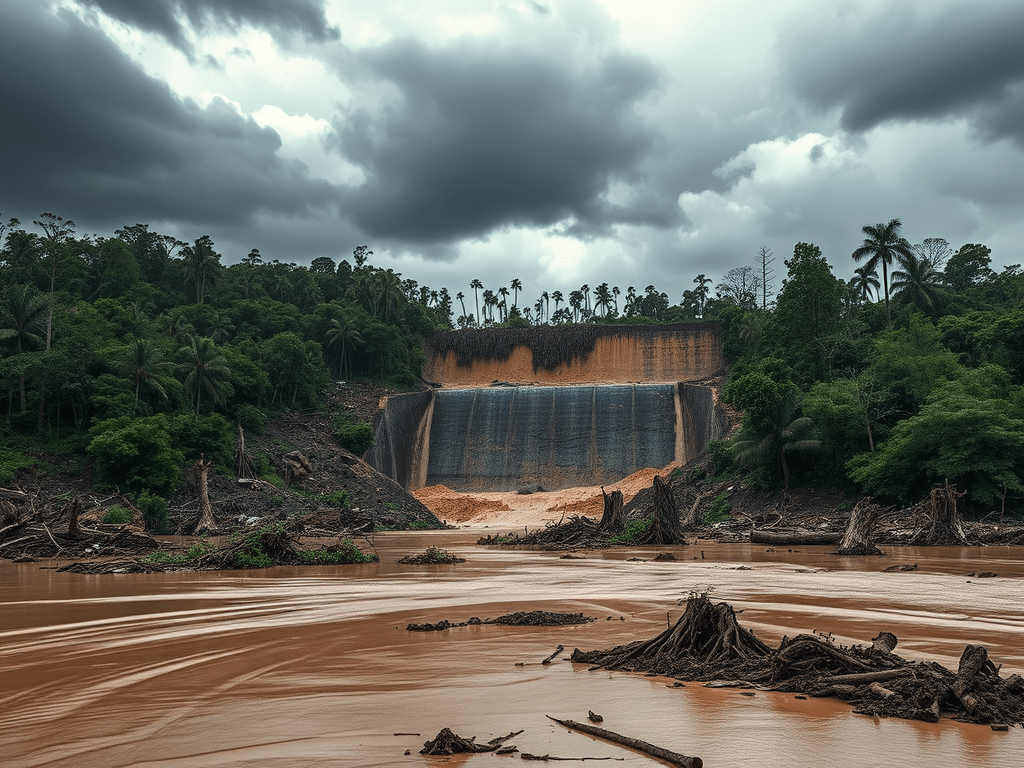
The Fundão dam collapse resulted in the death of 19 people, the release of 40 million cubic meters of toxic iron ore tailings (the by-product of mining) into the surrounding environment and a resultant 600km river of toxic mud which eventually reached the Atlantic Ocean. The collapse caused significant environmental and socio-economic damage to the surrounding communities especially in the Municipality of Mariana. The various claimants are seeking $36billion in damages.
Following the dam’s collapse, a number of claims, including mass torts were filed in Brazil. However, a considerable number of claimants also served an action in England, arguing that England was the relevant jurisdiction in which to bring the claim due to the listing of BHP Group (UK) Limited on the London Stock Exchange. Despite the jurisdiction case failing at first instance and the Court of Appeal refusing to grant the appeal, the case was reopened and heard on an exceptional basis. The Supreme Court upheld the jurisdiction of the ultimate parent, allowing the claim to proceed in the English Court. The first stage of the claim, the liability hearing, the largest claim in the history of English civil proceedings brought by over 600,000 claimants, took place between October 2024 and March 2025[2]2.
The claim: Liability, Loss and Limitation
Mrs Justice O’Farrell, in determining that the claims were not time barred by limitation, held that BHP is liable for the dam’s collapse under both Brazilian Environmental Law and the Brazilian Civil Code, and, therefore, the claim should proceed to the second stage to assess loss and damages.
- Liability:
While the High Court is no stranger to applying foreign law in relation to cases heard in England, Mrs Justice O’Farrell was tasked with considering two alternative limbs of liability under which BHP could be considered liable for the harm caused by the dam collapse: (1) the test under Brazilian environmental law; and (2) the test under Article 186 of the Brazilian Civil Code.
Test for strict liability (environmental law):
Brazilian Environmental Law establishes a “special” regime of strict, joint and several and unlimited liability, which is governed by concepts such as the polluter pays principle. The key elements for establishing strict liability, even from indirect polluters involve identifying conduct causative of environmental damage. When considering the relevant test, the High Court considered that a “polluter” is defined broadly as a natural or legal person “that is directly or indirectly responsible for any activity [causative of] the degradation of environmental quality”. The requisite “responsibility” is determined by a multifactorial approach, known as the “Benjamin Test”, by considering factors such as: (a) control over the relevant activity; (b) participation in the activity; (c) financing of the activity; (d) the economic benefit derived from the activity. Mrs Justice O’Farrell found that as BHP exercised control over Samarco’s operations, approved major projects like the Fundão dam and derived a significant financial benefit, that even though Samarco was the operating entity, that BHP, as the ultimate parent was responsible for the Dam’s collapse and resultant environmental damage.
The Brazilian Civil Code:
The Court also found BHP liable under Article 186 of the Brazilian Civil Code which imposes liability on “anyone who, by voluntary act or omission, negligence or imprudence, violates a right and causes damage to another“. Mrs Justice O’Farrell determined that BHP was liable for negligence on the basis that BHP “knew or should have known” about the structural issues with the Dam by no later than August 2014. Mrs Justice O’Farrell determined that BHP made several considerable omissions which are linked to the dam’s collapse including the fact that BHP senior personnel were on notice of the severe deficiencies with regard to drainage and repeated violations of measurements which they did not review or remedy, design amendments were not assessed by independent geotechnical experts, and failed to consider that the auditors had noted serious issues including insufficient technical knowledge in relation to the dam and the necessary consideration of the risk of serious deficiencies in the dam’s structure.
Therefore, even if Mrs Justice O’Farrell had not found that BHP was liable under the relevant environmental law, it would have still been considered to be liable under the Brazilian Civil Code.
2. Loss
Therefore, the High Court determined that BHP are liable for the loss incurred to the vast number of diverse claimants who are claiming a diverse range of damages including: (i) physical and psychological injury; (ii) property damage; (iii) loss of profits and income; (iv) damage to public property, the environment and cultural heritage; and (v) cost of remediation for the 600km of damage caused by the tailings which polluted the River Doce ecosystem.
- Limitation
The Court considered the case advanced by BHP that all, or the majority of claims, were timed barred under Brazilian law, however the High Court disagreed on the basis that, inter alia, Article 200 of the Civil Code applied. The relevant provision requires that when a civil action originates from a fact that must be ascertained in the criminal court, the limitation period will not run before the respective final judgment. There was a criminal investigation and then subsequent criminal proceedings in Brazil which focused on the cause(s) of the collapse and questions of fault, all of which were facts material to the civil claim. As one criminal action claim concluded in September 2024, the High Court considered that the limitation period began to run from at least that date, meaning all four claim forms issued between November 2018 and February 2023 were considered to be issued in time.
Conclusion:
The case demonstrates two unique points – first, the Court’s ability to handle mass tortious actions effectively and, second, that the Court is willing to find liability under foreign frameworks for English parent entities. The decision further cements the Court’s findings in the cases of Vedanta[3]3 and Okpabi[4]4, which determined that a UK domiciled parent company may owe a duty of care under English law, which is not too dissimilar to the Brazilian frameworks considered, to individuals who suffer loss resulting from activities of a foreign subsidiary. Companies would be wise to consider their corporate structures in light of the decision to determine potential parent company liability for harm caused by overseas subsidiaries, particularly as Mariana will open the floodgates for further claims of this nature.
- Municipo de Mariana and the Claimants v BHP Group (UK) Limited and BHP Group Limited [2025] EWHC 3001 (TCC) Case No: HT-2022-000304 ↩︎
- The claimants consist of individuals, businesses, faith-based organisations, indigenous and minority community members and, inter alia, municipalities ↩︎
- Vedanta Resources Plc and another v Lungowe and others [2019] UKSC 20 ↩︎
- Okpabi and others v Royal Dutch Shell and another [2021] UKSC ↩︎
 Legal Voices for the Future
Leave a comment