
About the Author: Alice Stephens graduated with a degree in Political Science from the University of Cambridge in 2023, the PGDL programme at BPP in 2025, and is currently preparing to undertake the SQE, sponsored by Macfarlanes.
As anti-protest legislation intensifies, many are turning to climate litigation as a new form of activism. However, recent ECtHR cases like Cannavaciuolo highlight that continuing battles over standing may halt collective climate action in the courts.
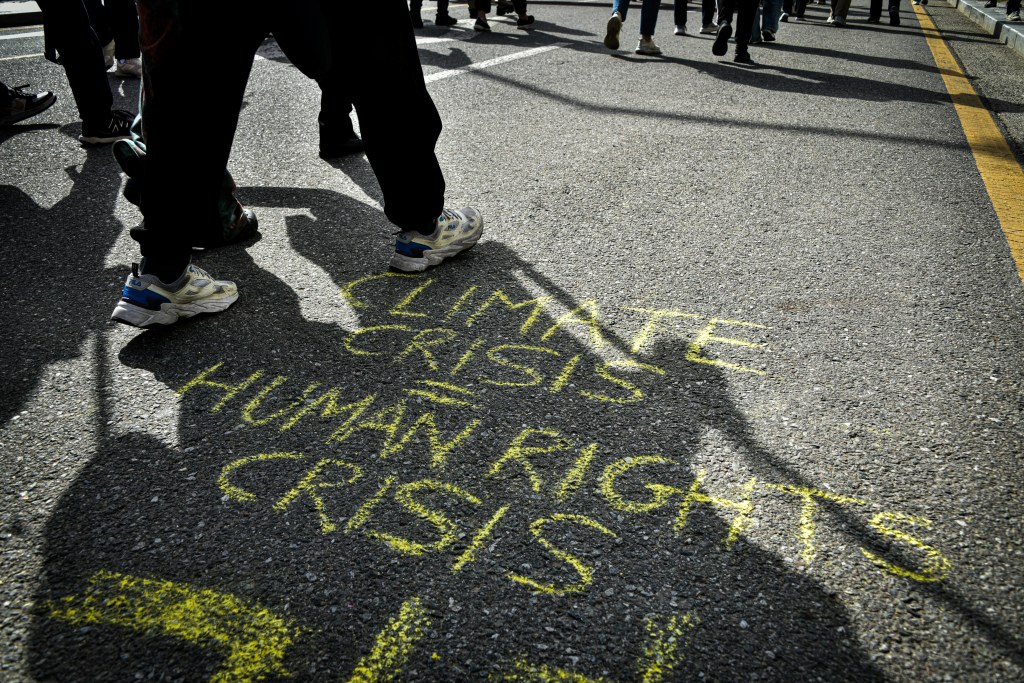
In Britain, climate protesters are arrested at three times the global average. Minutes away from the Climate Coalition’s recent ‘Mass Lobby’ event, a quiet and carefully planned affair which went ahead after receiving an official letter of support from Keir Starmer, the Courts of Justice served the ‘Walton 16’ a combined 35 years in prison for peaceful protest. Turn left towards the House of Lords and the Crime and Policing Bill, the fourth piece of new anti-protest legislation in as many years, is undergoing its second reading. If passed, the police powers bestowed by the Public Order Act 2023 will be supplemented with the banning of face coverings at protests, the prohibition of ‘climbing on war memorials’ and removals for activists on limited visas.
Against this backdrop, critiques of ‘activist’ climate lawyers are cast in a new light. As conventional street activism is curtailed by legislative reform, the courts increasingly become the only legitimate space to exert pressure. Litigation is slow, costly, and lacks the energy of protests – it also often fails to convey the scale of public desire for change – but as direct action becomes legally precarious, litigation is moving to the frontlines.
For any concerned environmentalist, there are question marks over the suitability of English courts as a forum for climate-related litigation. A recent LVF Knowledge Session on KlimaSeniorinnen v Switzerland explored the continuing barriers to standing for associations in public law matters, reflecting on whether the nature of environmental harm itself is likely to drive judges to relax strict guidelines.
On standing, KlimaSeniorinnen is widely seen as precedent-setting, but its precise implications remain unclear. The ECtHR cited the Aarhus Convention, an international treaty promoting the role of environmental associations in tackling environmental issues, to grant standing to the association KlimaSeniorinnen whilst rejecting four individual elderly women for failing to satisfy victim-status requirements. A new test was established in relation to human rights claims within the context of climate change – associations need not prove victim status themselves, but must be able to demonstrate 1) that they pursue a dedicated purpose aligned with the human rights of their members, and 2) that they are qualified to represent individuals subject to the threat of human rights violations due to climate change. Importantly, those individuals represented by the association do not need to meet the victim-status requirements themselves.
For many, this was a significant victory. The ECtHR effectively avoided actio popularis (an action brought by any individual on behalf of the general public interest rather than to protect specific rights) whilst acknowledging that, in the context of climate change, everyone may be a potential victim [489]. The ruling will be difficult for English judges to ignore, and it may be that the domestic test under Section 7 of the Human Rights Act will now be ‘read down’ pursuant to Section 3 for compatibility with the Convention.
However, elements of the KlimaSeniorinnen judgment are more orthodox. In a side-comment, the ECtHR reduced the applicability of the Aarhus Convention to climate matters, a statement taken by some as an attempt to prevent the expanded test for standing from applying to environmental cases. This is a re-iteration of a line often drawn between specific ‘environmental’ issues such as pollution, habitat protection, and Natura 2000 compliance, and broader ‘climate’ issues related to emissions targets and national climate plans which are ‘common concern[s] of humankind… [with] the necessity of promoting intergenerational burden-sharing in this context’ [499].
The continuing restrictions on standing for litigation concerning environmental harms (as opposed to climate harms) is problematic in the context of collective climate action, for three reasons.
First, the conceptual isolation of ‘climate change’ neglects the systemic nature of the problems which produce ‘environmental’ harms. For example, in the recent case of Cannavacciuolo v Italy [2025], waste dumping which caused water pollution in the Campania region was designated as a pure environmental harm – but are ongoing industrial practices not a systemic cause of water pollution? Is water pollution not transboundary, and might the impact not last for generations? The latter, on reflection, is especially true if measurable harm is found but the judgment still falls in favour of defendant polluters. The impact of environmental degradation is diffuse and cumulative, and as crisis conditions intensify, sharp distinctions between climate and environmental harm are increasingly artificial.
Second, restrictions on standing for associations in environmental harm cases undermine one of the most positive effects of the Aarhus Convention – namely, preventing piecemeal litigation leading to inconsistent outcomes across claimants and regions. Association-led claims can effectively target systemic problems, rather than treating environmental harms with systemic causes as akin to personal injury. From the perspective of climate activists looking to the courts for redress, litigation will only be satisfying if it is a tool for comprehensive reform with structural implications. From the perspective of the courts, the fragmentation of environmental harm into individual claims is just as likely to lead to a future flood of cases, with aggrieved individuals forced to seek redress for themselves.
Third, this piecemeal approach undermines the crucial concept of environmental stewardship. One of the primary aims of organisations like The Climate Coalition, Just Stop Oil and Greenpeace is to change the way we think about the environment. For climate and environmental issues, requiring measurable individual harms to access justice erodes the idea that society has collective responsibilities and rights tied to environmental protection. Missing from the reflections on climate-related harm in the KlimaSeniorinnen judgment is a proper understanding of environmental damage as latent and cumulative. Biodiversity loss and long-term soil contamination may be roughly categorised as isolated environmental harms today, but they will not be so in ten years. How widespread must water pollution in Campania be to reach this nebulous ‘climate change’ threshold? We may yet find out.
Photo Credit: Unsplash // Rema

 Legal Voices for the Future
Leave a comment