

Reflections from Harriet Hall, co-chair of the LVF Stewardship Committee
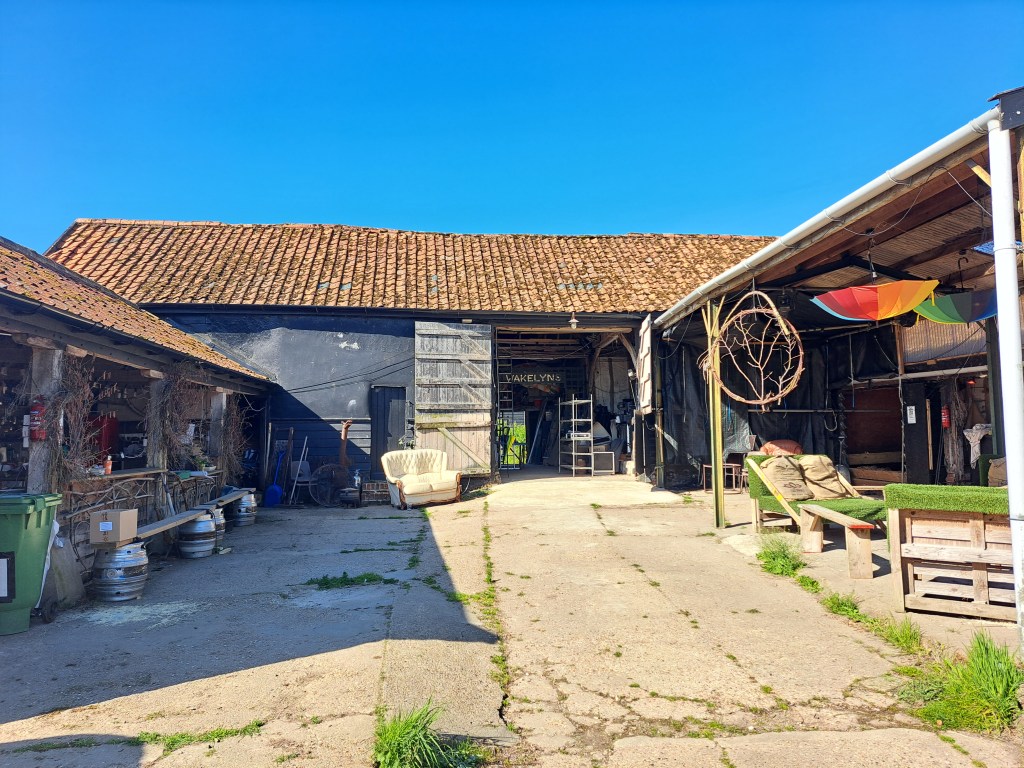
On 10-11 May 2025, a group of 30 LVF members travelled to Wakelyns Agroforestry in Suffolk, for our first LVF field trip, generously hosted by David Wolfe KC and Amanda Illing. Wakelyns is a pioneering 22.5 hectare farm that combines agroforestry, food, community, research and environmental stewardship. The Wakelyns model of sustainable farming gives a real insight into how farming can act as a solution and give back to people and planet.
Tour
On arrival, we were welcomed by David, who led us on a tour of the site. We learnt about Wakelyns’ unique approach to agroforestry, and how the business model supports both the environment and rural enterprise:
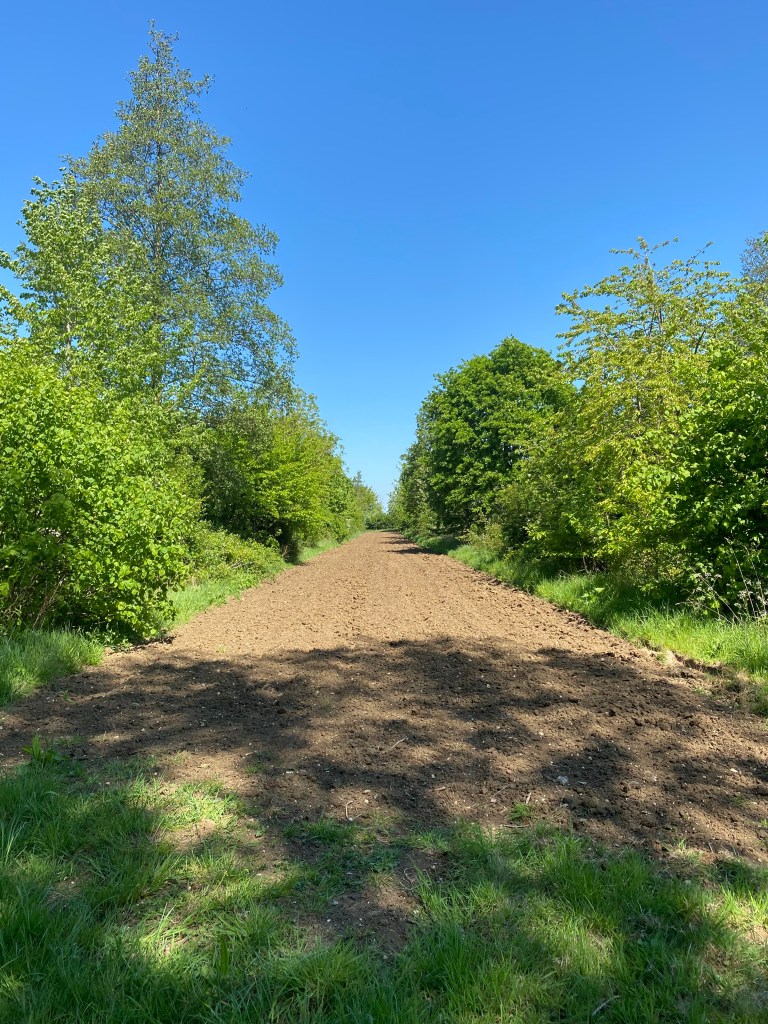
- Agroforestry in action: At Wakelyns, trees for timber, fruit and energy are planted in rows with shallow ploughed organic crop fields in-between, breaking up the landscape into a diverse mosaic. This integration of trees and varied crops reflects the farm’s ethos of “resilience through diversity” – a clear departure from the conventional monoculture approach to modern farming. David described how their methods help increase productivity, sequester carbon, create habitats and reduce vulnerabilities to pests, disease and soil erosion.
- Subsidies and policy: David also explained how recent changes to agricultural subsidy schemes now provide stronger incentives for agroforestry and sustainable farming practices. These changes could have a significant impact on farming behaviour, given the sector’s reliance on subsidies.
- Enterprise stacking and short supply chains: Wakelyns thrives on a model of short food chains, diversified income streams, and strong community links. David and Amanda host holidaymakers and NGO retreats on-site and have welcomed several independently run businesses to the farm, from bakers to willow weavers and apple juice pressers, which David termed “enterprise stacking”.

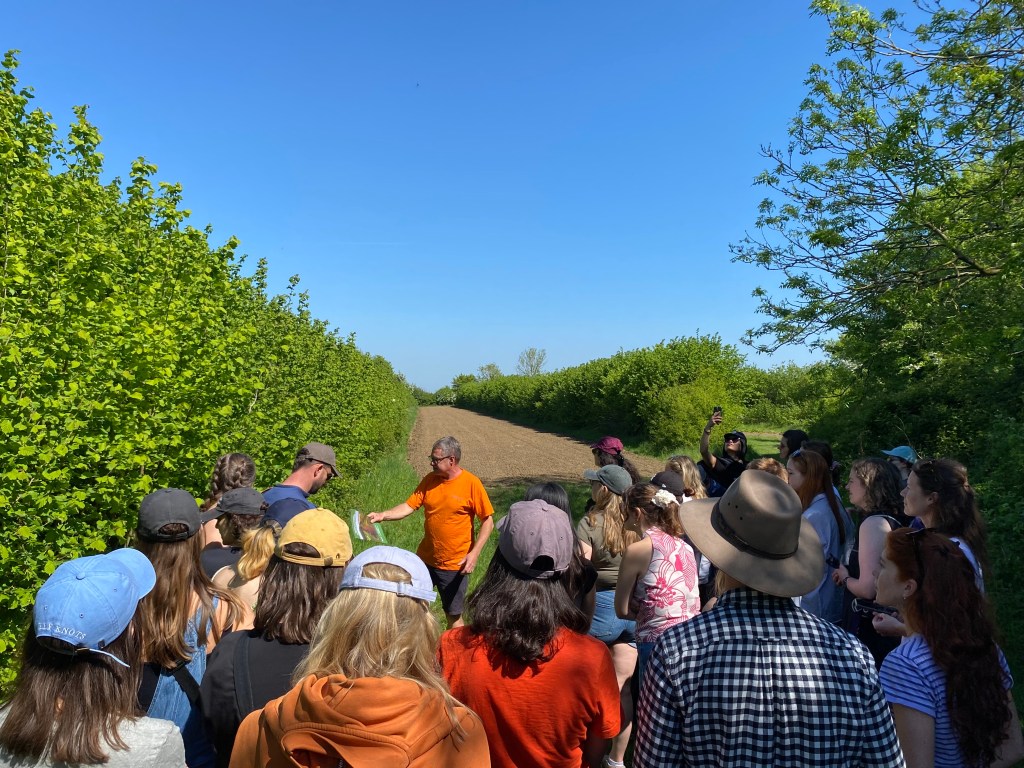
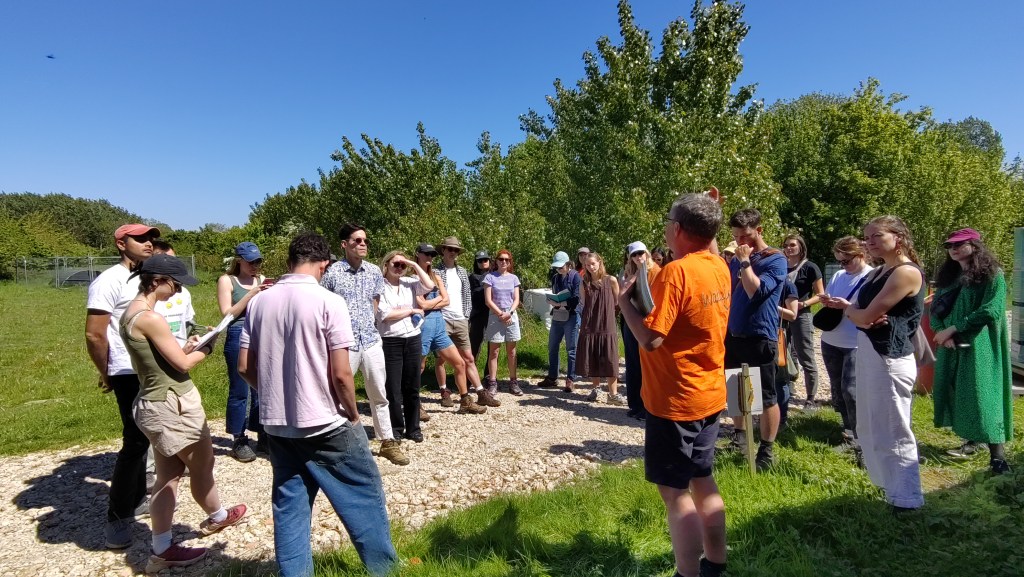
Top left: shows a tree managed using the technique of pollarding (removing the upper branches to encourage new growth – enhancing timber production and carbon sequestration). See how this differs from the neighboring tree to its left, which has not been pollarded.
Top right: shows one of the fields at Wakelyns – these are narrow, shallow ploughed strips of arable land alternating with rows of trees.
Getting Stuck In
After the tour, we rolled up our sleeves for some volunteering on the farm. Tasks included shifting log piles and cutting back brambles around the trees. We now fully appreciate why brambles are ‘nature’s barbed wire’!

Legal Insights
In the afternoon, we had the privilege of hearing from David about some of his recent cases. Alongside his work at the farm David is a barrister at Matrix Chambers, and has represented environmental NGOs in landmark judicial review claims including:
- R (River Action) v Environment Agency [2024] EWHC 1279 (Admin): this case concerned the adequacy of the EA’s enforcement action regards pollution of the River Wye by the spreading of manure from intensive chicken farms. The judgment deals with interpretation of the “Farming Rules for Water” (the Reduction and Prevention of Agricultural Diffuse Pollution (England) Regulations 2018) and the public authority duty under regulation 9(3) of the Conservation of Habitats and Species Regulations 2017.
- Friends of the Earth & Ors v Secretary of State for Energy Security and Net Zero [2024] EWHC 995 (Admin): which held that the government’s Carbon Budget Delivery Plan (“CBDP”) was unlawful. The CBDP was prepared by the Secretary of State for Energy Security and Net Zero (then Business, Energy and Industrial Strategy) pursuant to section 13 of the Climate Change Act 2008 (“CCA”). The judgement considers the burden of proof of “will enable” in s.13 of the CCA and applies the public law principle of unreasonableness to leaps in reasoning / evidence gaps in decision making.
It was fascinating to hear David’s reflections on these cases. A key learning for me was the important role played by the Aarhus Convention in capping liability costs, making it more feasible for NGOs and civil society groups to hold public bodies to account.

Systems Thinking in Practice
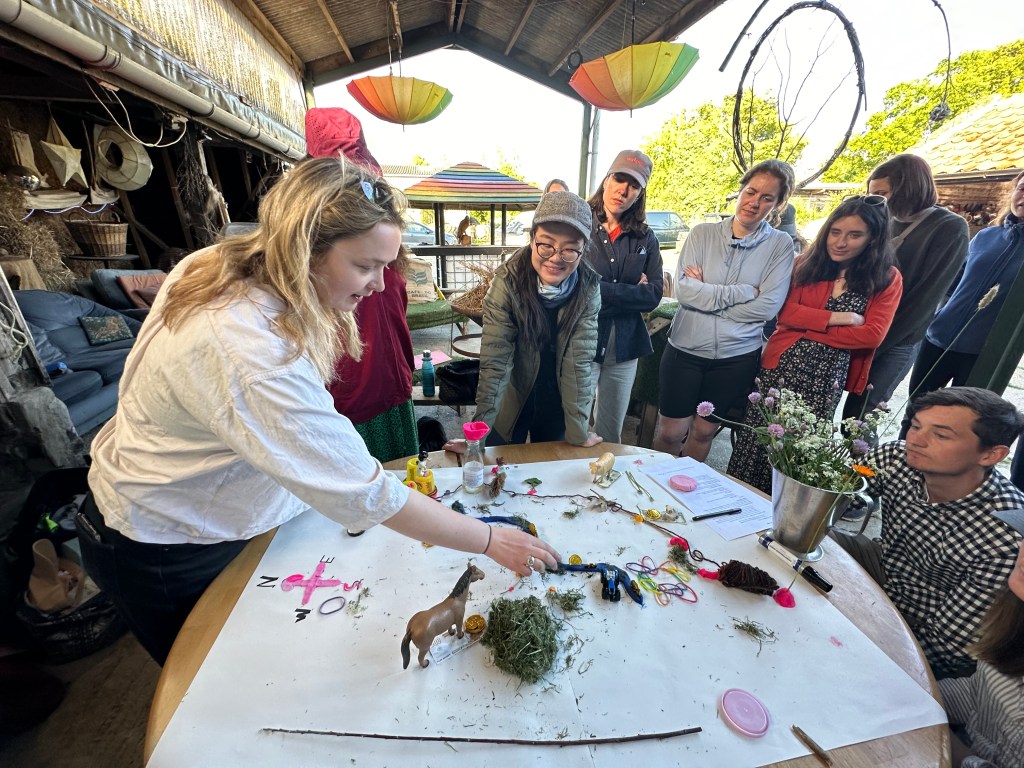
We were also joined by Ellie Percey from Commonland, who shared her knowledge of landscape restoration and systems change. Ellie facilitated some incredible activities throughout the day to get our creative juices flowing. These exercises helped us visualise the food system and experiment with the most effective ways to change a system. Key points to change that came our of our exercises were the separation of food consumers from food production, reliance on chemicals in place of nature-based solutions, and health and social impacts of the current system (such as food poverty and nutrient deficiencies).


Sunset Supper
We closed the day with a beautiful vegan organic meal, prepared by Silva Kitchen & Bakery using fresh local produce. We enjoyed this as the sun set over the Wakelyns meadow. Later, the evening continued with music around the farmyard fire pit. There might even have been a dance off or two…
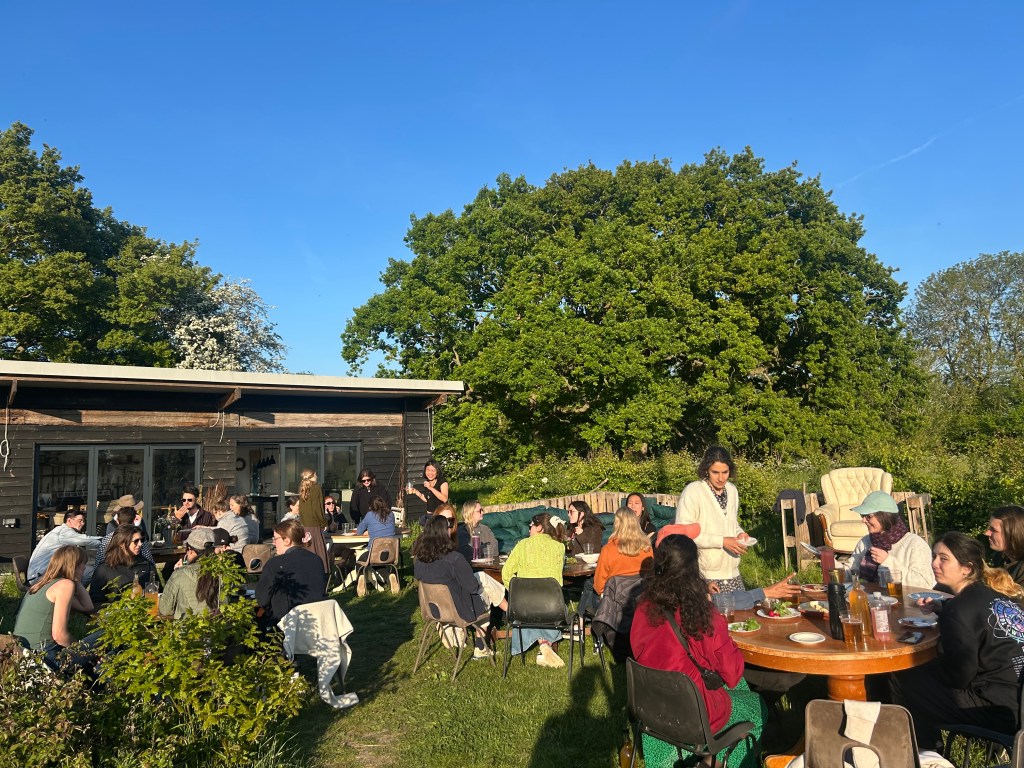
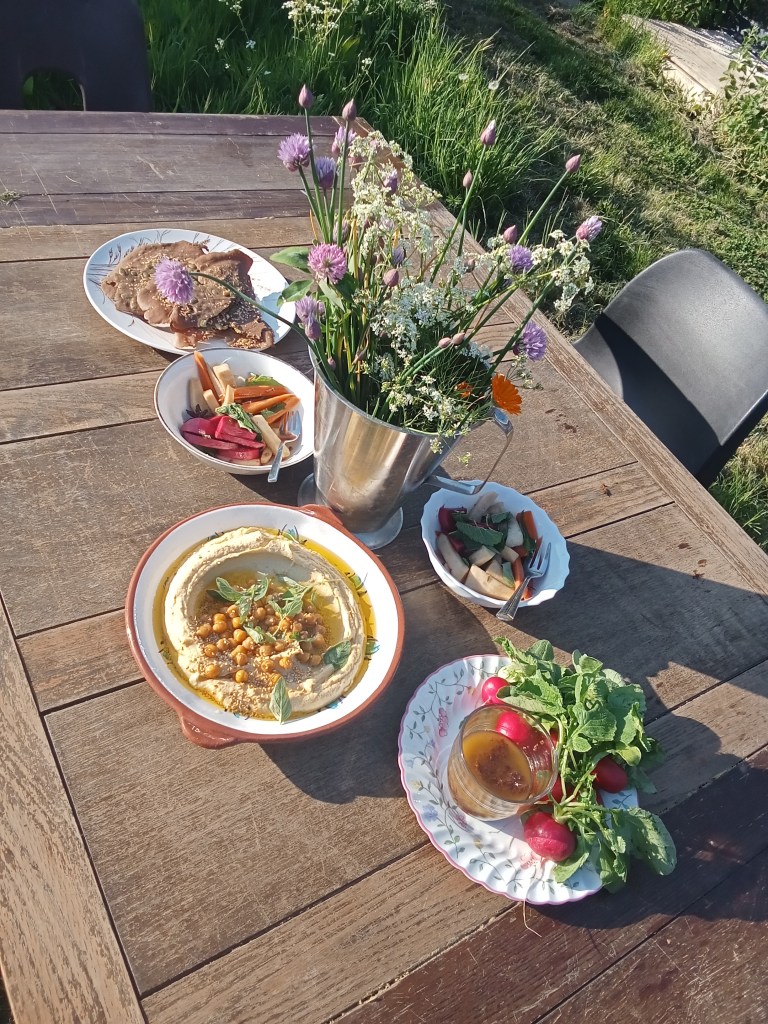
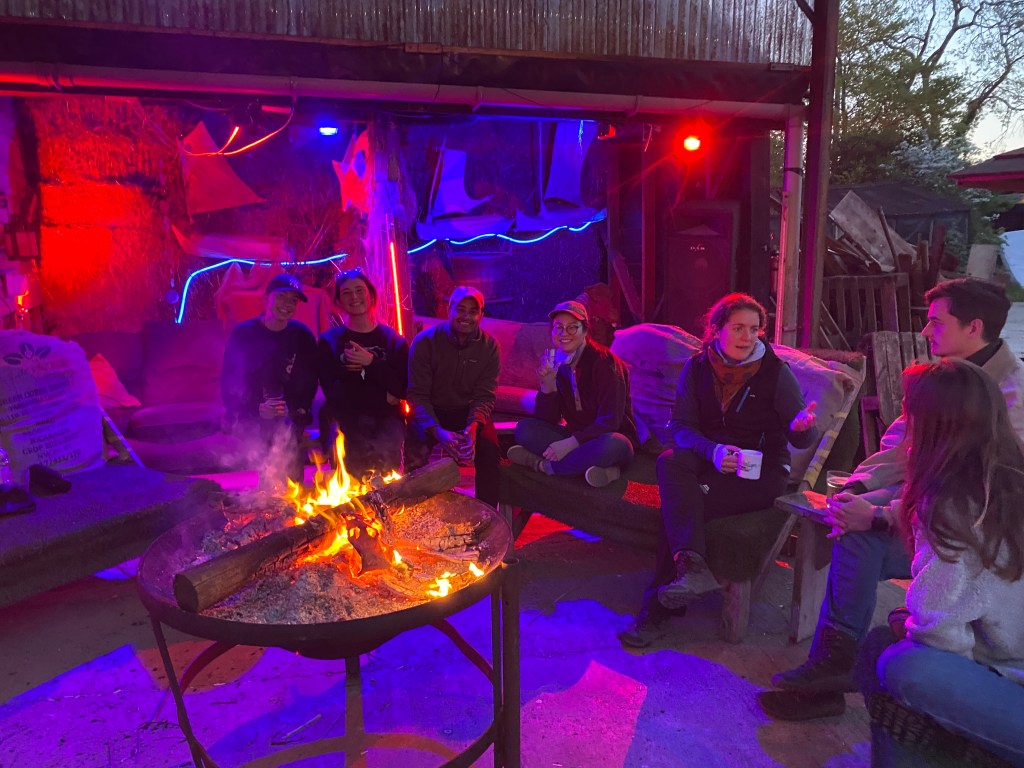
We are very grateful to David, Amanda and the entire Wakelyns team for their generosity, insights and hospitality. If you were not able to join us there we hope this write-up has given you a taste of what we learnt, and we have set out the full reading list below if you would like to learn even more. Also – Wakelyns hosts events year-round if you’d like to organise your own trip!
We’re confident this will be the first of many LVF field trips – and a meaningful and inspiring experience for everyone who attended!
Our Wakelyns Reading List
- Judgments relevant to environmental and climate change matters, discussed in David’s Knowledge Session:
- R (River Action) v Environment Agency [2024] EWHC 1279 (Admin)
- Friends of the Earth & Ors v Secretary of State for Energy Security and Net Zero [2024] EWHC 995 (Admin)
- Donella Meadows’ seminal article Leverage Points: Places to Intervene in a System
- In the article Meadows outlines twelve places to intervene in a complex system, ranked from least to most effective in terms of their power to create transformative change. At Wakelyns, we thought about the principles Meadows explores in the context of our UK food system.
- The leverage points presented in Meadows’ theory can be broken down into the following categories:
- Structural / mechanistic / quantitative leverage points: policies, practices, resource flows (Meadows: parameters such as taxes/subsidies/standards, structure of material stocks and flows, size of buffers and nodes of intersection, lengths of delays relative to the rate of system changes)
- Relational / social structural leverage points: relationships and connections, power dynamics (Meadows: strength of negative feedback loops related to impacts they are trying to correct against, the gain around driving positive feedback loops which amplify change, the structure of information flows e.g. who has access to what information, the rules of the system like incentives/punishments/physical constraints, the power to add, change, evolve or self-organise system structure)
- Transformative / mental model leverage points: mindsets, norms, values, paradigms (Meadows: the goals of the system and ability to change what a system aims to achieve, the mindset or paradigm out of which the system arises, the power to transcend paradigms)
- Other reading about the UK food system
- Mapping the UK Food System – great statistical and systemic-analytical overview, albeit a few years old. The two following sections are probably the most important to read: Section 2 covers Food System Drivers (root causes) and Section 3 covers Food System Outcomes (what results from certain food system activities; which helps us think about the need for integrated approaches to change).
- The National Food Strategy – an independent review of England’s food system and a proposal for changes, commissioned by the Conservative government, led by Henry Dimbleby and team. The Conservatives didn’t pick up on the recommendations, but it’s looking more promising with Labour who seem to be advocating for implementation of some of the key proposals (e.g. around health/nutrition, sustainability, food security and food equity. However, more lately Steve Reed made some announcements at the Oxford Farming Conference which felt a bit dissonant…: the whole speech can be found here.
- When thinking about the systemic issues around food (e.g. land use in this case, but also health, etc.): one of the key recommendations of the National Food Strategy was The Land Use Framework. This was under public consultation until April 2025: https://www.gov.uk/government/news/government-launches-national-conversation-on-land-use.
- A good overview by some key organisations working in the space: Growing the Local Food Sector: Snapshot of Barriers and Solutions.
- An existing system change initiative for inspiration: https://www.sustainweb.org/bridging-the-gap/

 Legal Voices for the Future
Leave a comment